
1907 Ford Model S
1907 Ford Model S
The 1906 Ford Model N was a massive success for the Ford Motor Company. Inexpensive, reliable, easy to drive, and compact proved to be the winning formula in a still-developing automobile industry. Everything about the Model N made sense for customers, but Ford recognized a growing desire for enhanced styling and refinement.
As 1907 arrived, Ford introduced not one but two successors: the Model R and the Model S.
The Model R debuted first, offering cosmetic and practical upgrades. Still built before Ford implemented the moving assembly line, the Model R replaced simple side steps with running boards, adopted semi-enclosed fenders, widened its seating, and expanded the rear deck to allow storage—including space for a spare tire. About 2,500 Model R Roadsters were produced and sold, and by the end of the run all units were spoken for—leaving late buyers waiting until 1908.
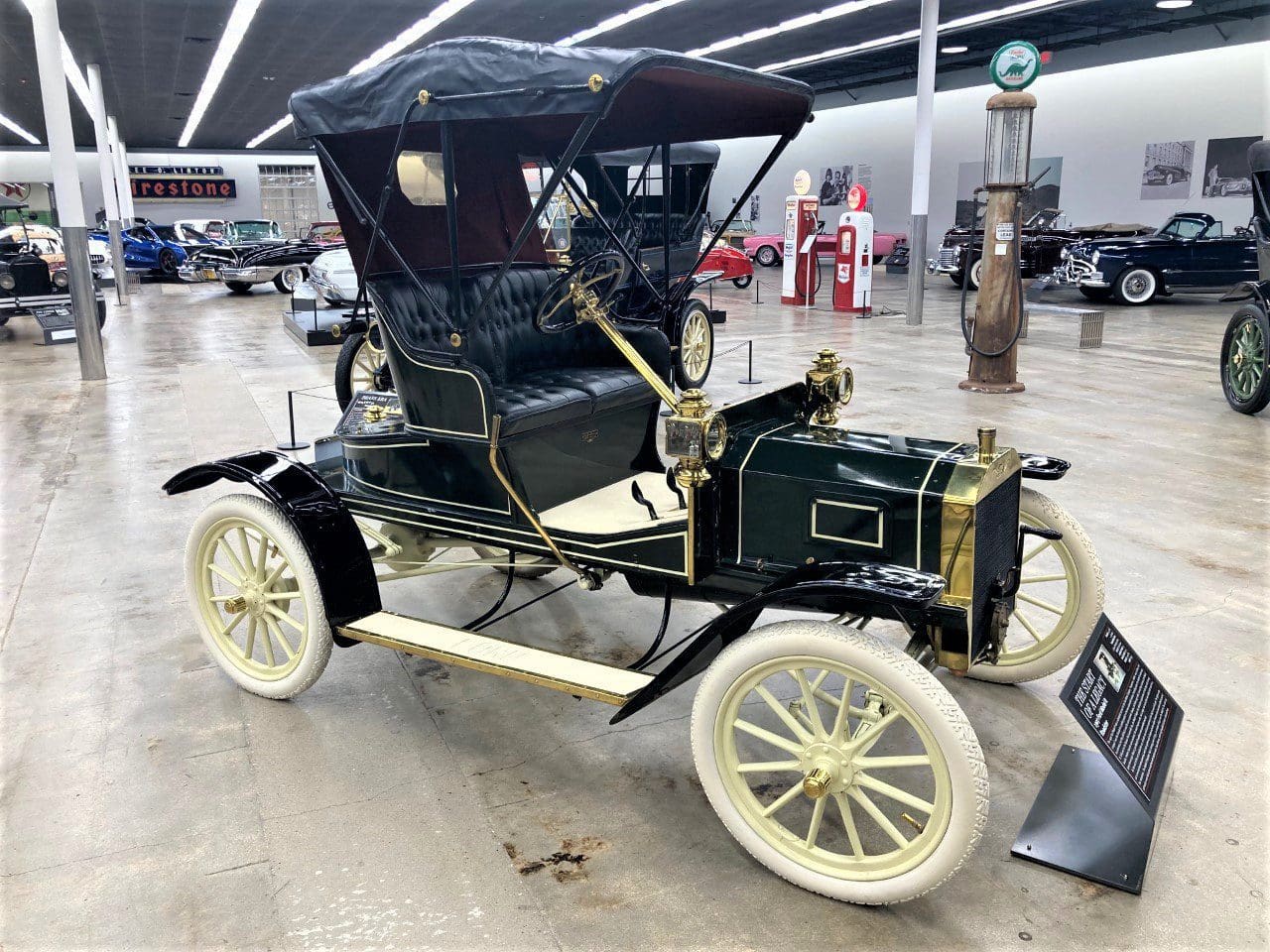
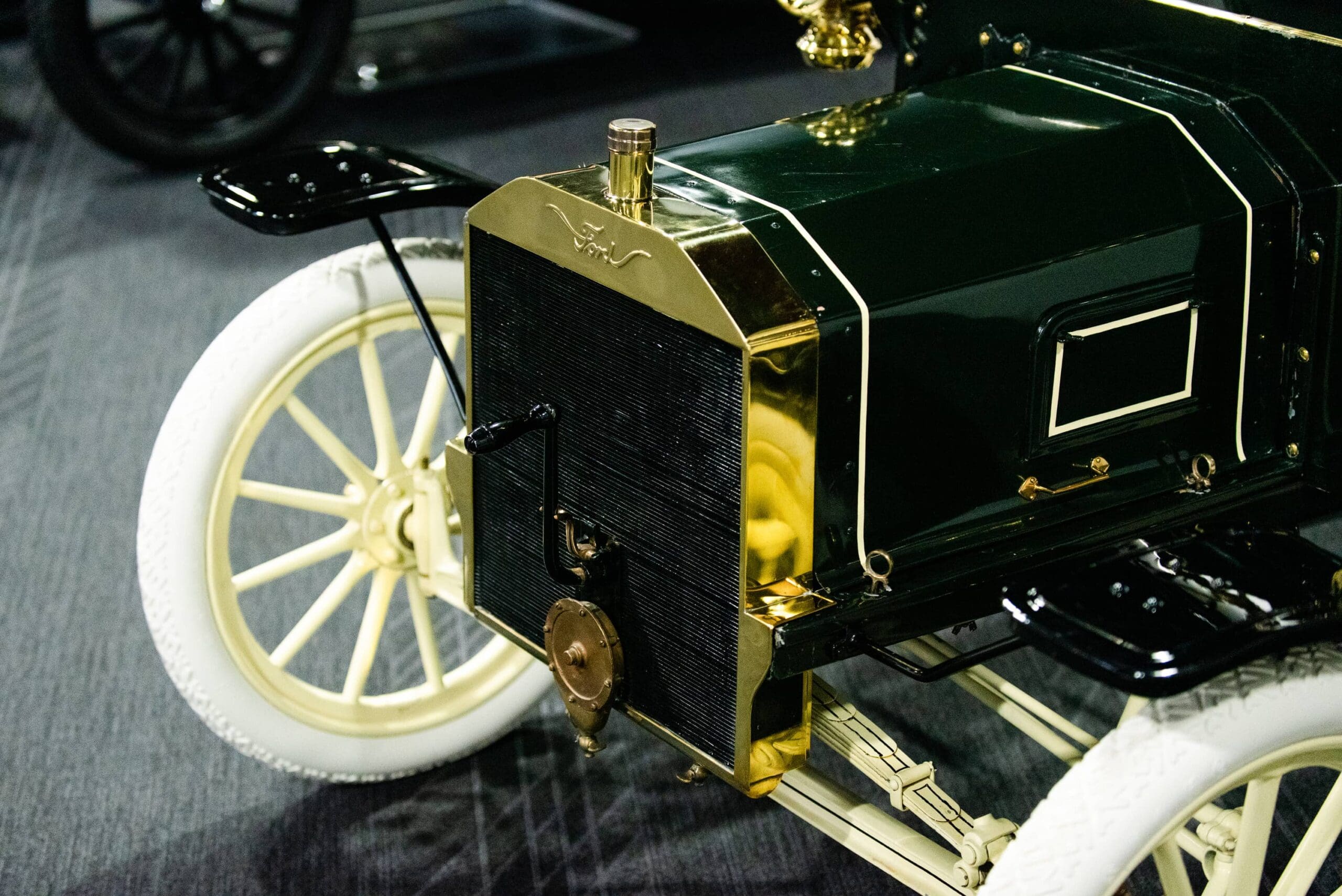
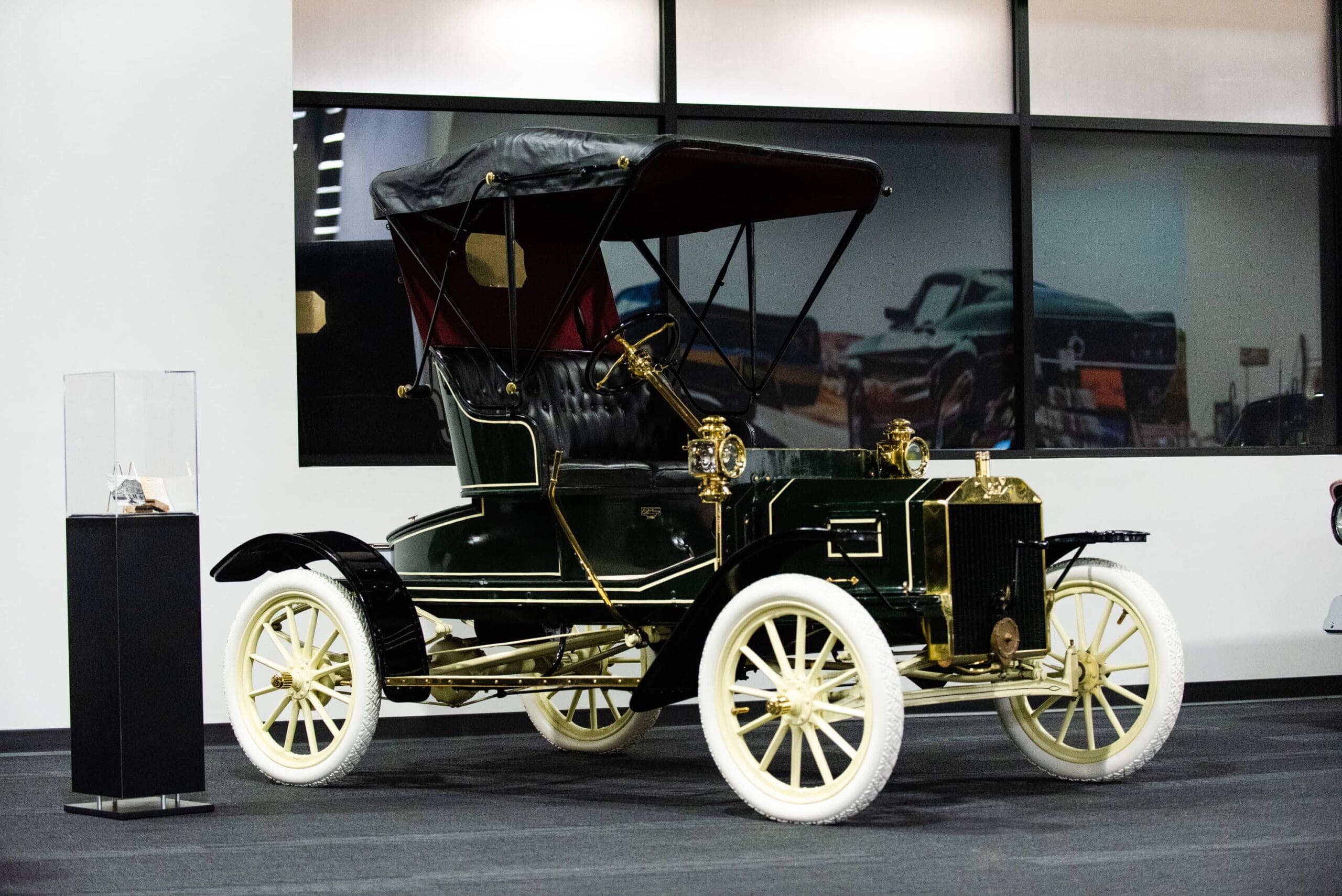
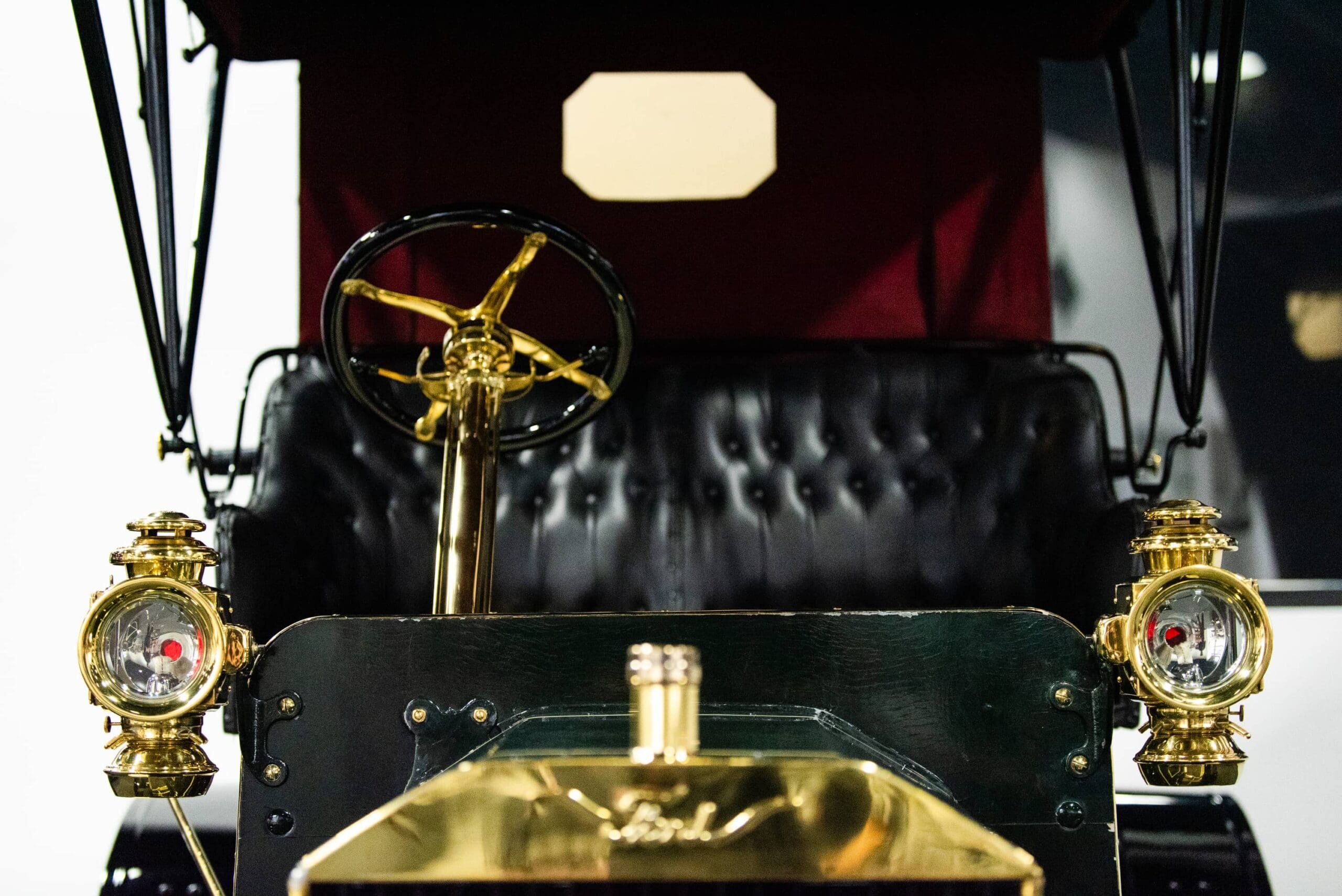
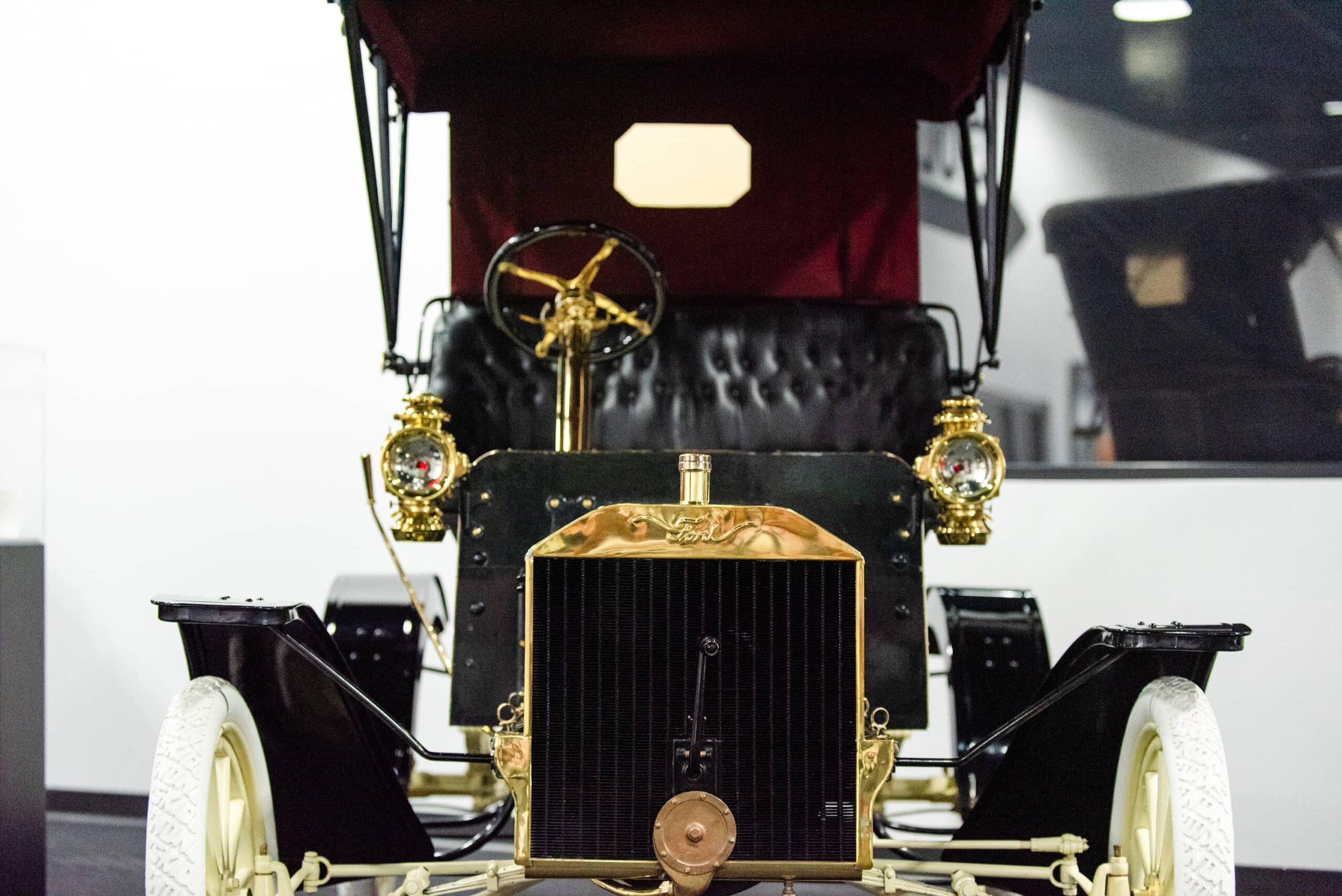
Following closely behind, Ford launched the 1907 Model S, an improved and slightly more upscale variant of the R. While mechanically similar—retaining the trusty 177-CID 4-cylinder engine producing 15–18 brake horsepower—the Model S offered notable refinements. It featured a larger body, upgraded fenders, and a roomier rear deck. The Model S also introduced an optional mother-in-law seat and typically included a step-through body style, making it more user-friendly. Ford produced the Model S in two versions: the Model S Runabout, the more common variation, and the Model S Roadster, a rarer and more stylish configuration.
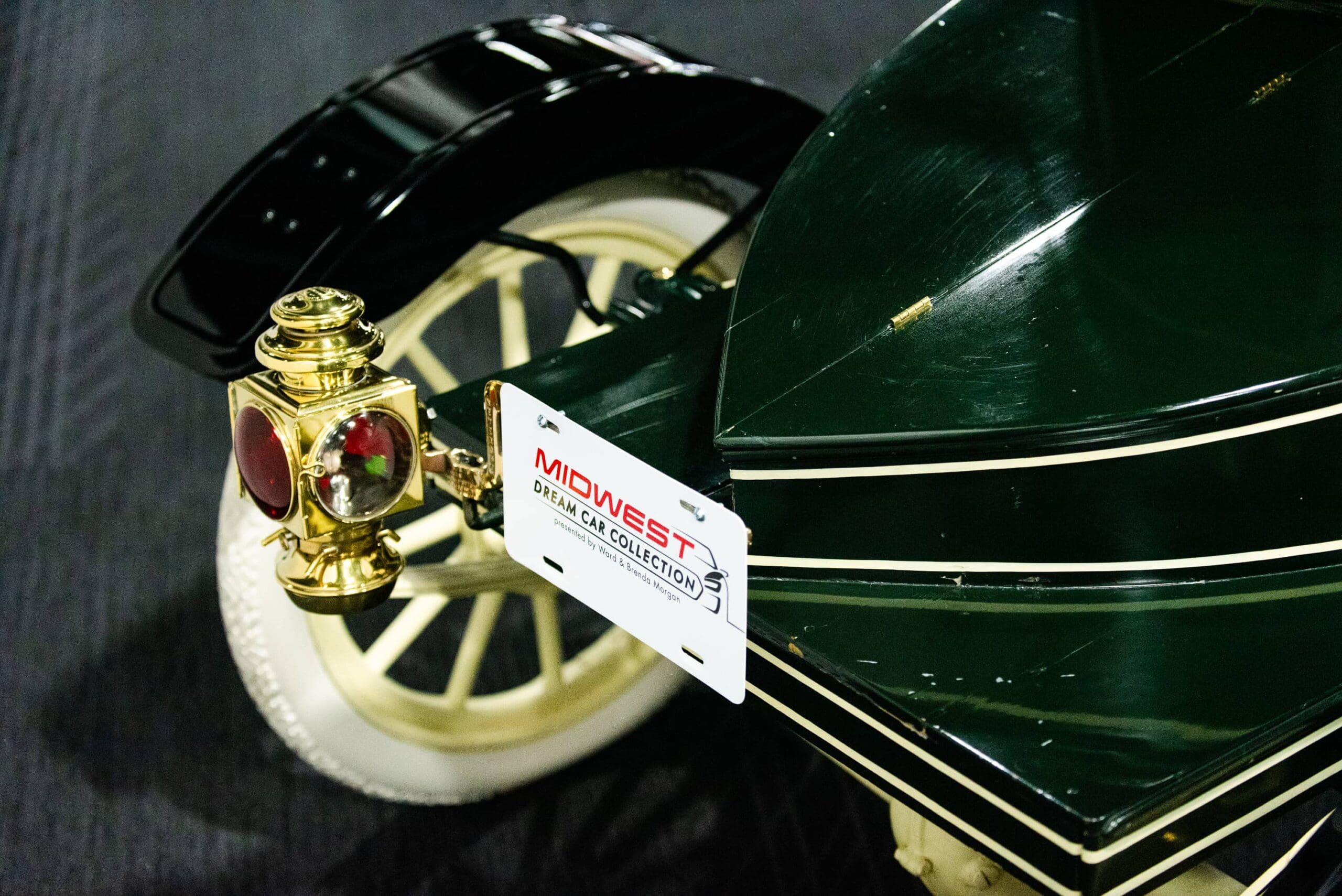
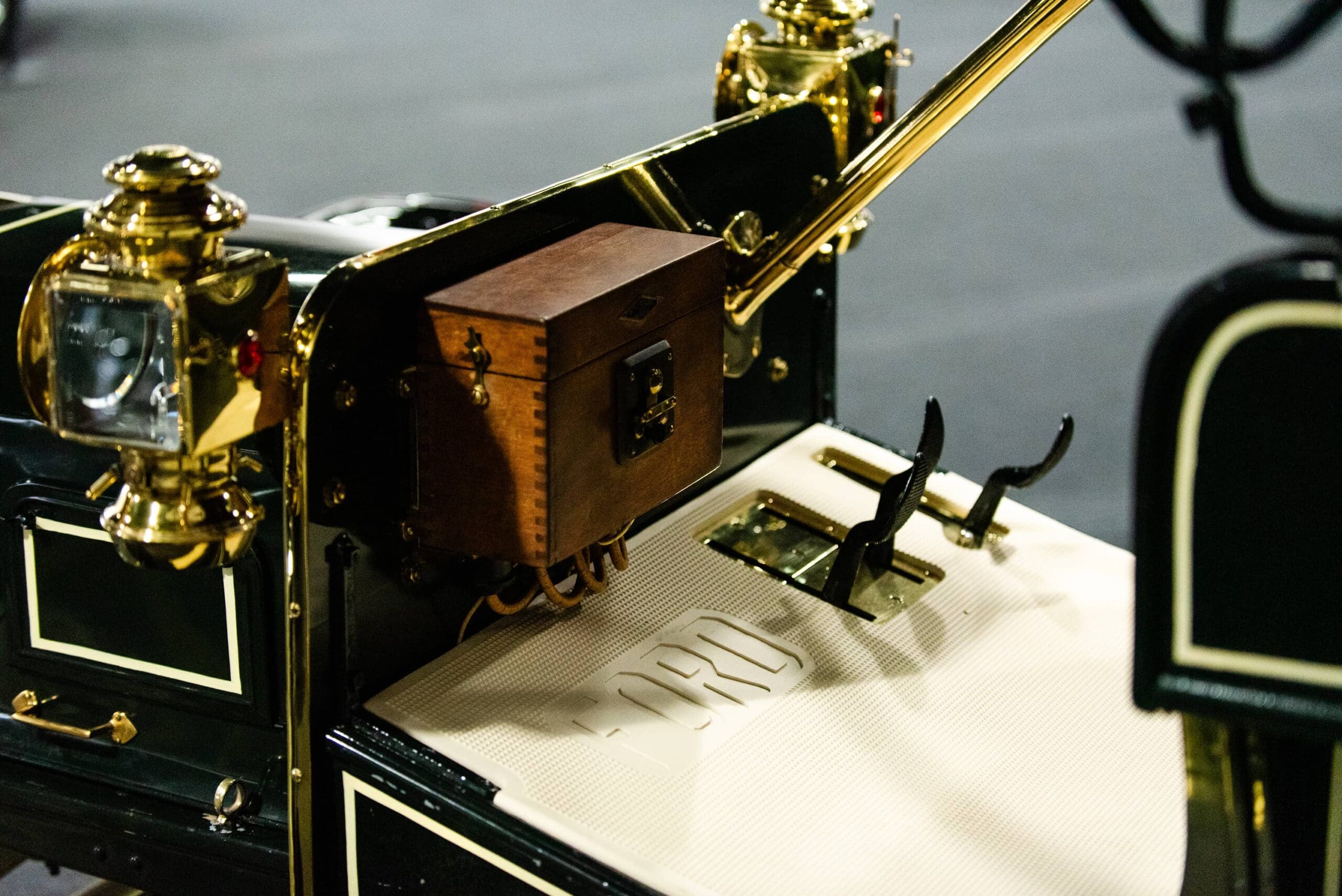
The lighting system still relied on kerosene cowl lamps, and restorations of surviving examples—like the one displayed here—often feature cream wooden-spoke wheels and white rubber Firestone tires to match period aesthetics. Like the Model R, the Model S utilized a planetary transmission, a disc clutch, and a chain drive, along with Ford’s familiar 2F/1R floor controls.
The Model R originally retailed for $750—about $150 more than the Model N—while the Model S carried a similar price depending on configuration. Both models were typically finished in very dark green paint and equipped with leather seats, brass trim, and an 8-gallon fuel tank.
The Model R and Model S remained in production until 1908, when they were replaced by the Ford Model T. Building on the reliability of the Model N and the refinements introduced with the R and S, the Model T became the first truly affordable automobile—easy to maintain, dependable, and accessible to mass markets. Together, the N-R-S series formed the foundation on which Ford revolutionized transportation.
Kimes, Beverly (1996). Standard Catalog of American Cars 1805-1942. Krause Publications. ISBN 0-87341-428-4.