THE FASCINATING HISTORY OF AUTOMOTIVE CRUISE CONTROL
From Doug’s desk
Few modern driving features feel as effortless as cruise control, yet its origins trace back to a surprisingly human frustration. The concept is widely credited to inventor Ralph Teetor, who was blind from a young age and found himself irritated by a driver who constantly sped up and slowed down. Determined to solve the problem, Teetor developed a mechanical system in the 1940s that could maintain a steady vehicle speed. His invention was patented in 1948 and would soon lay the foundation for a feature drivers now take for granted.
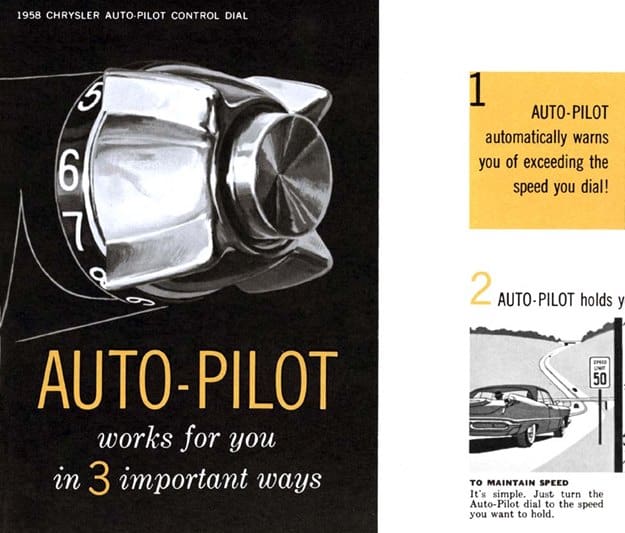
Cruise control made its first major production debut in the 1950s, most notably on Chrysler vehicles under the name “Auto-Pilot.” Early systems were entirely mechanical, using a combination of speed-sensing governors and throttle controls to hold a constant speed. While innovative, these systems were relatively simple and best suited for the open highways that were rapidly expanding across America during the postwar era. As interstate travel increased, so did the appeal of a device that could reduce driver fatigue on long trips.
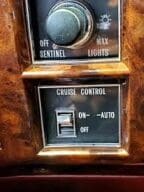
By the 1970s, cruise control began to gain wider popularity, partly driven by the fuel-conscious mindset of the era. The oil crises of that decade pushed automakers and drivers alike to look for ways to improve fuel efficiency, and maintaining a steady speed proved to be one effective strategy. Manufacturers refined the technology, transitioning from purely mechanical systems to electronic controls that offered improved accuracy and reliability. What had once been a luxury feature started to become more common across a broader range of vehicles.
The real transformation came in the late 20th and early 21st centuries with the introduction of computer-controlled systems. Advances in onboard electronics allowed cruise control to integrate with a vehicle’s engine management and braking systems. This evolution paved the way for adaptive cruise control, which uses radar or cameras to monitor traffic ahead and automatically adjust speed to maintain a safe following distance. No longer limited to holding a fixed speed, cruise control had become an active participant in driving.
Today, cruise control is a key component of advanced driver-assistance systems (ADAS), working alongside lane-keeping assist, collision avoidance, and other safety technologies. In many newer vehicles, adaptive systems can bring a car to a complete stop and resume movement in traffic, edging closer to semi-autonomous driving. What began as a mechanical solution to an inconsistent driver has grown into a sophisticated network of sensors and software designed to enhance both safety and comfort.
From its humble beginnings in the mind of Ralph Teetor to its role in today’s high-tech vehicles, cruise control reflects the broader story of automotive innovation. It is a reminder that even the simplest ideas—like maintaining a steady speed—can evolve into transformative technologies that reshape how we experience the road.