Why Personal History Makes Every Museum Car One-of-a-Kind
Walk through the rows of gleaming classics in any automobile museum, and it’s easy to be swept up by their beauty—chrome polished to a mirror shine, flawless paintwork, interiors without a wrinkle. But what truly transforms a car from a mechanical object into a piece of living history isn’t just how it looks—it’s the story it tells.
Every car has a past, and every past has its characters. Ownership records, photographs, maintenance logs, and period accessories can bring a vehicle’s history to life in a way that no restoration alone can match.
Take, for example, a modest family sedan that might otherwise fade into the background among flashier sports cars. Learn that it carried a young couple on their honeymoon in 1954, made countless trips to the grocery store, and ferried kids to school for a decade, and suddenly that sedan becomes a time capsule of postwar America. A visitor doesn’t just see the car—they imagine the life lived inside it.
Period accessories also play a role. A dashboard tissue dispenser, a vintage AAA badge, or a pair of white leather driving gloves tucked into the glovebox all give subtle hints about the car’s era and its owner’s personality. Each accessory is a piece of cultural context, connecting the visitor to the time when the car was more than a display—it was a companion.
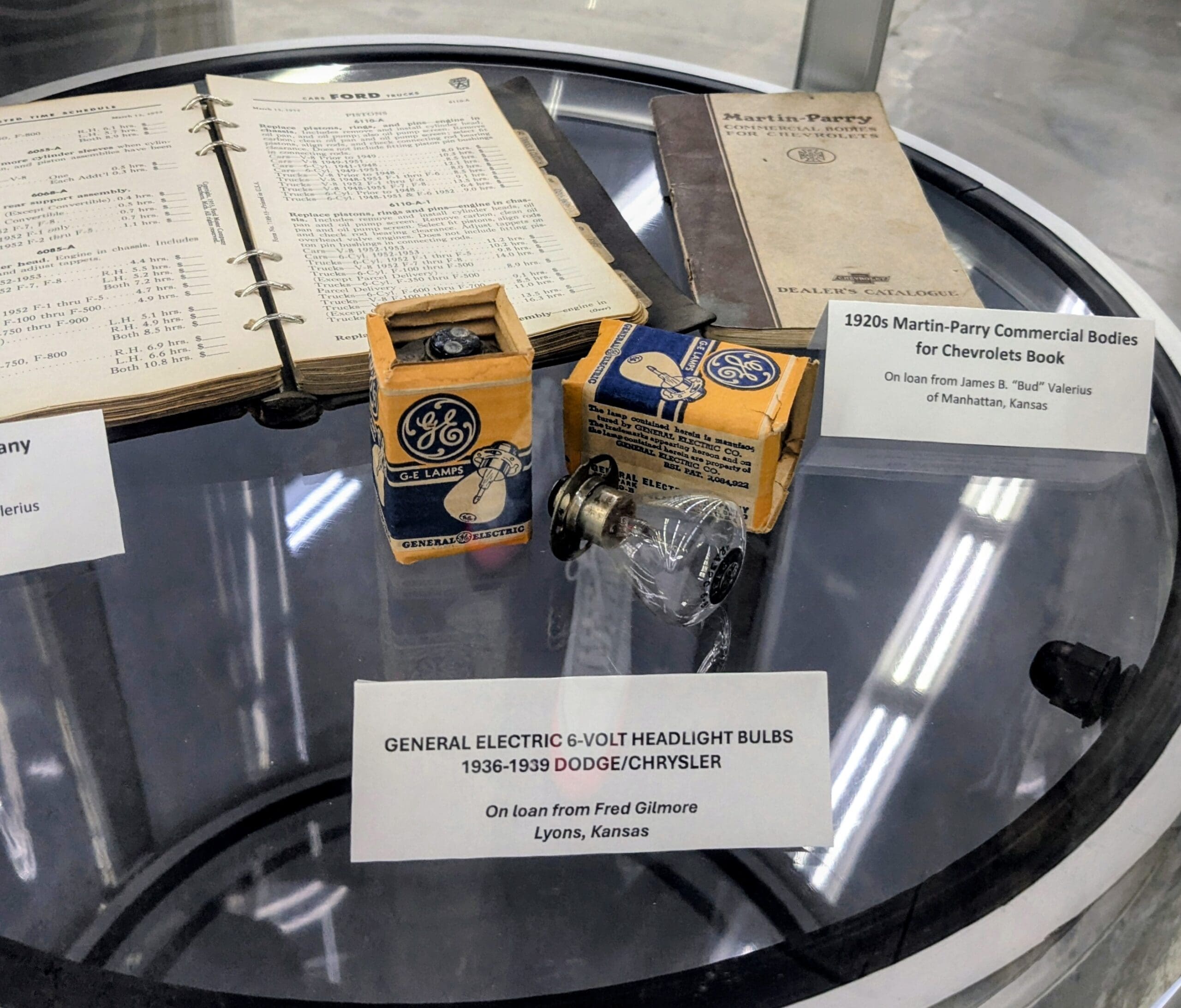
At the Midwest Dream Car Collection, we strive to present cars as they were experienced in their prime. That often means displaying period-correct radios, luggage, or even original dealership paperwork alongside the vehicle. These artifacts provide tangible connections between the viewer and the era the car represents.
In some cases, ownership history adds an unexpected twist. A car that once belonged to a celebrity or a beloved community figure carries a sense of pride for visitors who recognize the name. Sometimes the story is bittersweet—like a car restored in memory of a family member who loved it—but those emotional threads make the museum experience richer and more human.
This is why curators work so hard to gather documentation. Old photographs, titles, service records, or even handwritten notes from past owners can be as valuable as the vehicle itself in telling its story. Without them, a car risks becoming a beautiful but anonymous artifact. With them, it becomes a chapter in a much larger book.
So next time you stroll past a museum display, take a moment to look beyond the shine. Read the placard, study the accessories, and picture the people who once turned the key and felt the engine rumble to life. Every scratch once had a cause, every mile an adventure, and every car a story worth telling.
Doug Meloan, Curator