By Doug Meloan, Curator
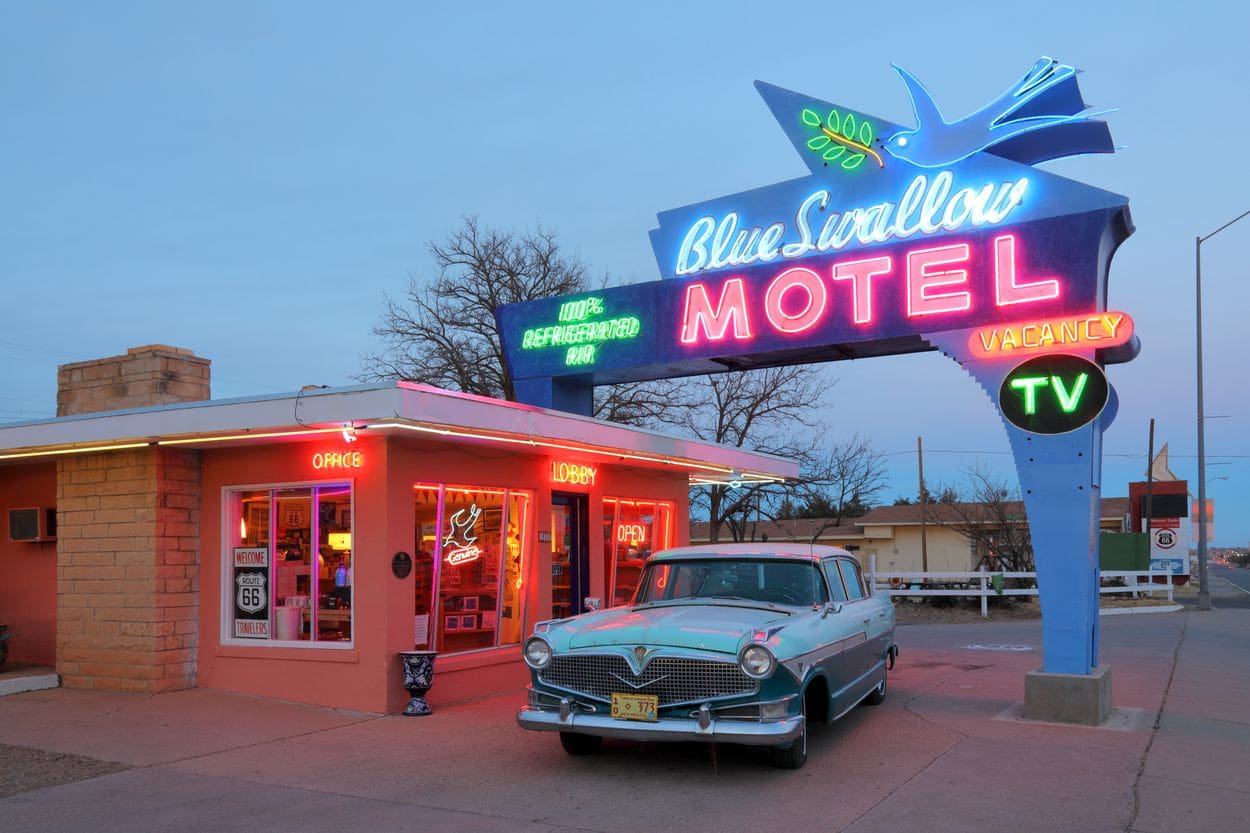
My wife and I love traveling by car, especially along the remnants of historic highways like Route 66 and the Lincoln Highway. These road trips offer something you simply can’t experience from 30,000 feet in the air—the character of small towns, the rhythm of the open road, and the chance encounters with people who make these communities unique. To capture the feel of yesterday, we sometimes stay at old mom-and-pop motels. Some of those stays are less than glamorous, but many turn out to be truly special—filled with charm, nostalgia, and stories worth remembering.
It’s easy to take for granted the abundance of hotels and resorts available today, but in the earliest days of motor travel, accommodations were far more modest. In the 1910s and 1920s, as roads were slowly improving, the idea of overnight lodging for automobile travelers had not yet caught up. At first, motorists relied on town-center hotels, many built near railroad depots—convenient for train passengers, but not for those driving across country.
That gap gave rise to “tourist camps,” open fields where families could pitch a tent beside their car. Communities often sponsored these camps, adding simple amenities like water pumps, fire pits, and restrooms in hopes of attracting travelers (and their spending) to local businesses.
By the 1920s, entrepreneurs saw potential in offering something a little more comfortable. “Cabin camps” or “cottage courts” began popping up along major highways, featuring rows of small, individual cabins. These provided privacy, a bed, sometimes a stove, and in some cases even a garage for the car.
From these humble beginnings, the American motel was born—a concept that combined easy roadside access with the comfort of a private room. The evolution from tents to cabins to motels mirrors the story of American car culture itself: a tale of innovation, independence, and the irresistible lure of the open road.