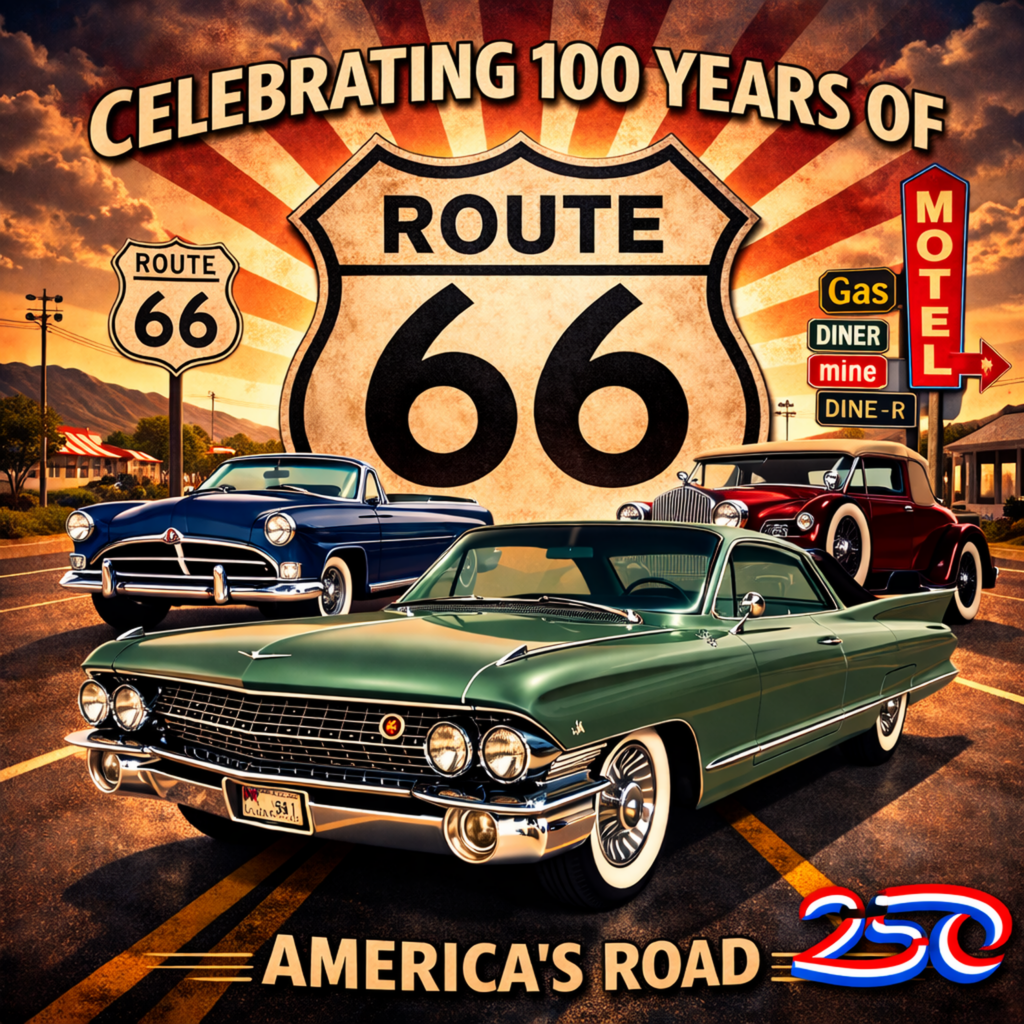
In 2026, one of America’s most legendary highways reaches a remarkable milestone. Route 66—affectionately known as the “Mother Road”—celebrates its 100th anniversary. For a full century, this ribbon of pavement has carried dreamers, families, truckers, soldiers, tourists, and car enthusiasts across the heart of the United States, weaving together stories that define the American road trip.
Established on November 11, 1926, Route 66 originally stretched 2,448 miles from Chicago, Illinois, to Santa Monica, California. It crossed eight states—Illinois, Missouri, Kansas, Oklahoma, Texas, New Mexico, Arizona, and California—linking rural towns to major cities and opening new economic opportunities along the way. At a time when automobiles were transforming daily life, Route 66 became a symbol of mobility, freedom, and possibility.
During the Dust Bowl of the 1930s, the highway earned its enduring nickname. In The Grapes of Wrath, John Steinbeck called it the “Mother Road,” as thousands of families traveled west in search of work and a better life. In the years that followed, Route 66 evolved from a path of hardship into a road of adventure.
After World War II, America embraced the automobile like never before. Families piled into sedans and station wagons for cross-country vacations. Neon-lit motels, quirky roadside attractions, drive-in restaurants, and service stations sprang up along the route. Route 66 became a living showcase of car culture—chrome bumpers gleaming in the sun, tailfins stretching skyward, and engines humming across wide-open landscapes. It wasn’t just a road; it was an experience.
Though Route 66 was officially decommissioned in 1985, when the Interstate Highway System replaced much of its original alignment, it never truly disappeared. Preservationists, local communities, and enthusiasts have kept its spirit alive. Today, travelers still seek out surviving stretches of the original road, restored diners, vintage gas stations, and historic motor courts. Route 66 remains an enduring symbol of Americana—where history, architecture, and automotive heritage meet.
As we celebrate its centennial, Route 66 offers an opportunity to reflect on the profound impact the automobile has had on our culture. The road shaped not only how we travel, but how we live—connecting communities, inspiring innovation, and fueling industries. It helped define the golden age of road trips and continues to inspire generations of car lovers and explorers.
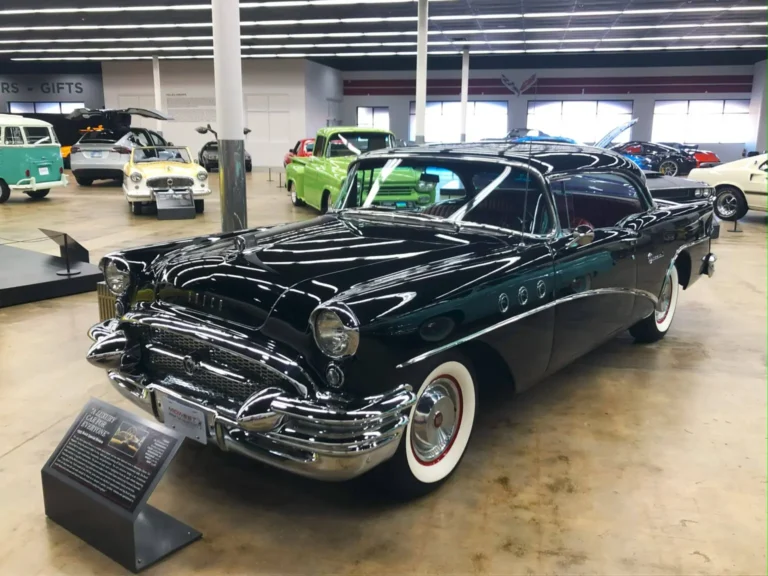
Here at the museum, we recognize Route 66 as more than just a highway. It represents the evolution of transportation, design, and freedom on four wheels. Many of the vehicles in our collection are the very types that once cruised the Mother Road—family sedans loaded for vacation, trucks hauling goods between towns, and sporty convertibles chasing the horizon.
As Route 66 turns 100, we invite you to celebrate this milestone with us. Share your stories of road trips past, favorite roadside stops, or memories behind the wheel. After all, the story of Route 66 is ultimately the story of all of us who have ever felt the call of the open road.
Here’s to 100 years of adventure—and to the journeys still ahead.